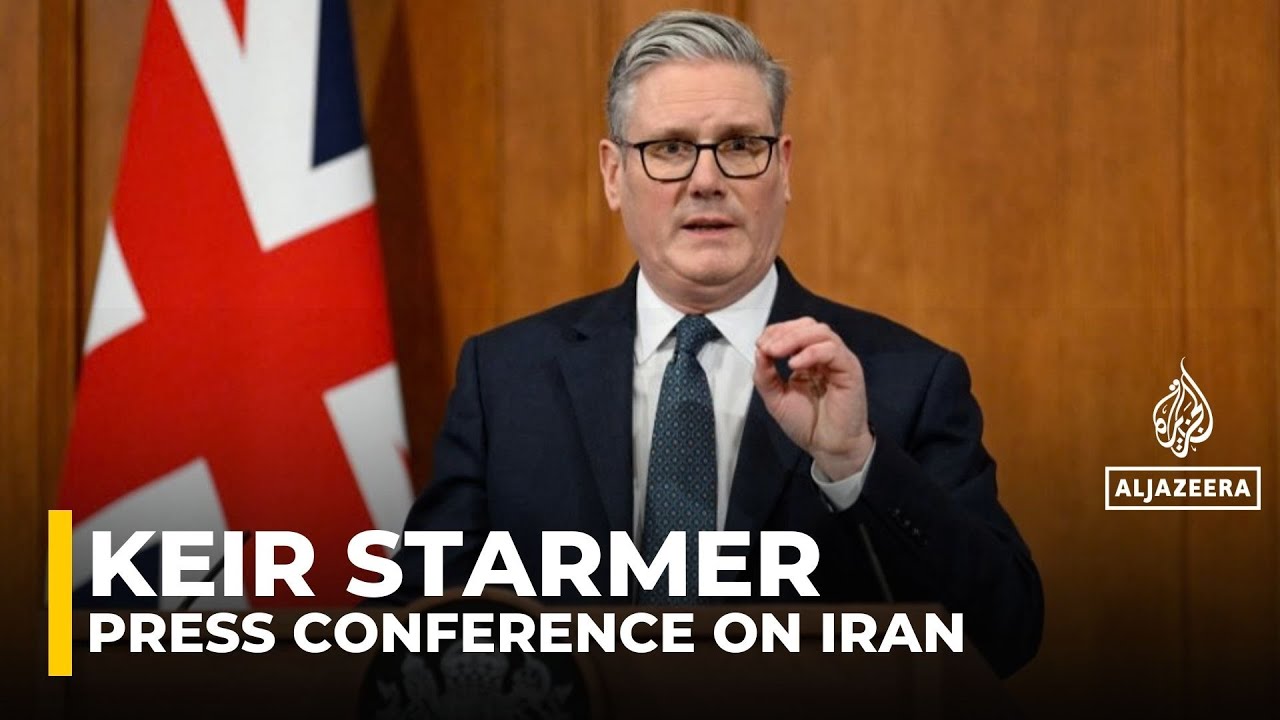
UK PM Starmer Navigates Iran Tensions: Fighter Jets to Qatar as Debate Heats Up
The geopolitical landscape of the Middle East remains a crucible of tension, and the United Kingdom finds itself carefully charting a course through its complex currents. In a series of recent developments that have sparked significant debate, UK Prime Minister Keir Starmer has publicly affirmed a strategic dual approach: resolute non-participation in offensive military strikes against Iran, coupled with the deployment of additional fighter jets to Qatar. This nuanced strategy, presented as being firmly rooted in the national interest and a commitment to de-escalation, represents a critical juncture in British foreign policy concerning the region. As the world watches US and Israeli actions closely regarding Iran, Starmer’s decisions offer a distinct *uk pm iran update* that underscores a desire for stability over direct confrontation, even while reinforcing regional security postures.
The announcement of sending four extra fighter jets to Qatar comes amidst Starmer's vigorous defense of his administration's response to the escalating situation, particularly his refusal to join the United States and Israel in any potential offensive military actions. This stance has drawn both praise for its measured approach and criticism for perceived slowness or detachment. However, the Prime Minister insists his choices are guided by deeply held principles, international law, and a paramount ambition to prevent the Middle East from being plunged into a wider, more devastating conflict. This article delves into the intricacies of Starmer's strategy, exploring the motivations behind the Qatar deployment, the principles guiding his decisions, and the broader implications for the UK's role in global affairs.
Starmer's Strategic Stance: A Principled Approach to De-escalation
Prime Minister Keir Starmer has consistently articulated a clear rationale for the UK’s current position regarding Iran: a firm refusal to engage in offensive military strikes alongside the US and Israel. This decision, he contends, is not born of weakness or indifference, but rather from a profound understanding of the UK's *national interest*. What constitutes this "national interest" in a volatile region? For Starmer, it encompasses several critical components: the safety and security of British citizens at home and abroad, the protection of vital trade routes, upholding international law, and, crucially, preventing a regional conflagration that would have catastrophic humanitarian and economic consequences globally.
Starmer's emphasis on "law and principles" reflects a commitment to a rules-based international order, favoring diplomacy and multilateralism over unilateral military action. This stance subtly, yet significantly, distinguishes the UK’s approach from some of its closest allies. Historically, the UK has often played a significant diplomatic role in the Middle East, a legacy that Starmer appears keen to revive, albeit within a modern context. By prioritising de-escalation, the government aims to create space for diplomatic solutions rather than contributing to an already fraught atmosphere. This principled approach is eloquently detailed in our related coverage:
Keir Starmer's Iran Stance: Prioritizing UK National Interest. It highlights how the long-term stability of the region, and by extension global security, is seen as more effectively served by restraint and strategic engagement than by direct military intervention.
The debate around Starmer's decision often questions whether such restraint signals a weakening of alliances. However, proponents argue it demonstrates a sophisticated understanding of alliance dynamics, where partners can hold distinct, yet complementary, foreign policy positions. By avoiding offensive strikes, the UK retains its credibility as a potential mediator and a force for stability, a role that would be severely compromised by direct military involvement in an escalating conflict. This cautious approach also reflects lessons learned from past interventions, where the long-term consequences have often been more complex and enduring than initially anticipated.
The Qatar Deployment: A Calculated Move Amidst Regional Volatility
While ruling out offensive strikes, Starmer’s government has simultaneously announced a tangible military commitment: sending four additional fighter jets to Qatar. This *uk pm iran update* might seem contradictory at first glance, but it represents a carefully calculated strategic maneuver designed to bolster regional security without directly engaging in hostilities. Qatar is a vital strategic partner for the UK and a key regional ally, hosting significant US military assets, including Al Udeid Air Base, one of the largest American military facilities in the Middle East.
The deployment of Royal Air Force (RAF) jets, likely Eurofighter Typhoons given their versatility and existing presence in the region, serves multiple purposes. Firstly, it acts as a strong deterrent. The presence of advanced combat aircraft sends an unequivocal signal that the UK is serious about protecting its interests and supporting its allies in the Gulf, without necessarily endorsing offensive actions against Iran. Secondly, these jets enhance air policing capabilities, helping to secure airspace and critical maritime routes, particularly important given recent threats to shipping. Thirdly, they contribute to intelligence gathering and reconnaissance, providing valuable situational awareness in a rapidly evolving environment. This intelligence can be crucial for understanding escalation risks and informing diplomatic efforts.
Moreover, the deployment strengthens interoperability with allies already in the region, including the US, by providing a tangible contribution to collective defense and regional stability. This isn't about preparing for war with Iran; it's about projecting strength, providing reassurance to allies, and safeguarding British interests defensively. It's a demonstration of capability and resolve that aims to prevent further destabilization, rather than provoking it. The choice of Qatar as the base underscores a commitment to partners who advocate for regional stability and moderation, further cementing the UK's role as a supportive, yet independent, actor.
Navigating International Relations: Starmer's Rejection of Past Rhetoric
The discourse surrounding the UK's position on Iran took an intriguing turn with Prime Minister Starmer's strong rejection of remarks attributed to Donald Trump concerning Winston Churchill, reportedly made on March 5, 2026. While the precise context of Trump's Churchill remark isn't fully detailed in the reference, it's highly probable it aimed to draw a contrast between the UK's current measured approach and a perceived more interventionist, 'bulldog' spirit often associated with Churchill's wartime leadership. Starmer's swift and emphatic dismissal of such comparisons highlights his determination to define the UK's foreign policy on its own terms, based on contemporary challenges and values, rather than being bound by historical analogies or external pressures.
Starmer’s insistence that Britain would "stick with its principles" is a powerful reaffirmation of an independent foreign policy vision. These principles likely encompass a commitment to international law, humanitarian considerations, and the pursuit of diplomatic solutions over military confrontation. In a world increasingly shaped by complex, interconnected threats, Starmer appears to advocate for a foreign policy that prioritizes long-term stability and de-escalation, even when differing from close allies like the US. This doesn't signify a weakening of the "special relationship" but rather a maturity where allies can, and sometimes must, pursue different tactical paths to achieve shared strategic goals.
This principled stance is crucial for the UK's credibility on the international stage. By demonstrating a willingness to prioritize its own national interest and ethical framework, even when it means diverging from powerful partners, the UK reinforces its sovereignty and its capacity for independent thought. It allows the UK to maintain a unique voice in multilateral fora, advocating for peace and stability from a position of consistent policy. For a deeper dive into the underpinnings of this policy, read:
Starmer on Iran: Why the UK Avoids Offensive Strikes. This distinct approach positions the UK as a thoughtful player in global security, one that can exert influence through diplomacy and strategic presence rather than solely through direct military might.
The Broader Implications: UK's Role in a Changing Middle East
Prime Minister Starmer’s handling of the Iran situation carries significant implications for the UK's long-term role in the Middle East and its standing on the global stage. By adopting a strategy that marries non-participation in offensive strikes with strategic defensive deployments, the UK signals a shift towards a more pragmatic and perhaps less interventionist foreign policy in a region perpetually on the brink. This approach presents both challenges and opportunities.
**Challenges:**
* **Balancing Alliances:** Maintaining strong relationships with the US and Israel while pursuing a divergent policy requires astute diplomacy and clear communication to prevent misunderstandings or perceived abandonment.
* **Perception of Influence:** Some critics might argue that abstaining from direct military action diminishes the UK's influence or leadership in crisis situations.
* **Risk of Escalation:** Despite best intentions, regional conflicts can escalate unpredictably, potentially forcing the UK to reconsider its stance or react more decisively.
**Opportunities:**
* **Enhanced Diplomatic Credibility:** By not being a direct combatant, the UK retains its ability to act as a more credible mediator or facilitator in future peace processes.
* **Focus on Non-Military Tools:** This strategy encourages a greater reliance on diplomatic engagement, economic sanctions, humanitarian aid, and intelligence sharing – crucial tools for soft power projection.
* **Long-Term Stability:** A consistent policy of de-escalation, supported by defensive deterrence, could contribute to a more stable regional environment in the long run, benefiting all parties.
* **Protection of Resources:** Avoiding direct conflict allows resources to be allocated towards other pressing national priorities, while still maintaining a robust defense posture.
**Practical Insights for UK Foreign Policy:**
1.
Invest in Diplomacy: Strengthen diplomatic channels and presence in key regional capitals to maintain dialogue and exert influence without military force.
2.
Targeted Sanctions: Utilize economic sanctions strategically against destabilizing actors, ensuring they are multilateral and have clear objectives.
3.
Humanitarian Leadership: Continue and expand the UK's role in humanitarian aid and development, building goodwill and addressing root causes of instability.
4.
Intelligence Sharing: Enhance intelligence cooperation with regional partners and allies to anticipate threats and inform policy decisions.
5.
Cyber Security: Focus on capabilities in cyber defense and offense, recognizing the evolving nature of modern warfare and geopolitical influence.
6.
Regional Partnerships: Deepen security partnerships with stable regional actors like Qatar and others, focusing on training, interoperability, and defensive capabilities.
This evolving *uk pm iran update* signifies a maturation of British foreign policy, adapting to a multipolar world where global challenges demand nuanced and carefully considered responses.
In conclusion, Prime Minister Keir Starmer's administration is treading a deliberate path through the labyrinthine complexities of the Middle East, particularly concerning Iran. His dual strategy of explicitly avoiding offensive military strikes while simultaneously bolstering defensive capabilities through the deployment of fighter jets to Qatar is a clear articulation of a foreign policy prioritising national interest, principled action, and regional de-escalation. By rejecting calls for direct military intervention and reaffirming a commitment to international law and distinct principles, Starmer aims to position the UK as a responsible yet resolute actor, dedicated to preventing a wider war while safeguarding its own security and interests. This approach, though subject to ongoing debate, marks a significant *uk pm iran update* that underscores the UK's determination to influence events through a calculated blend of deterrence, diplomacy, and strategic restraint in a volatile world.